
Reem AlMealla
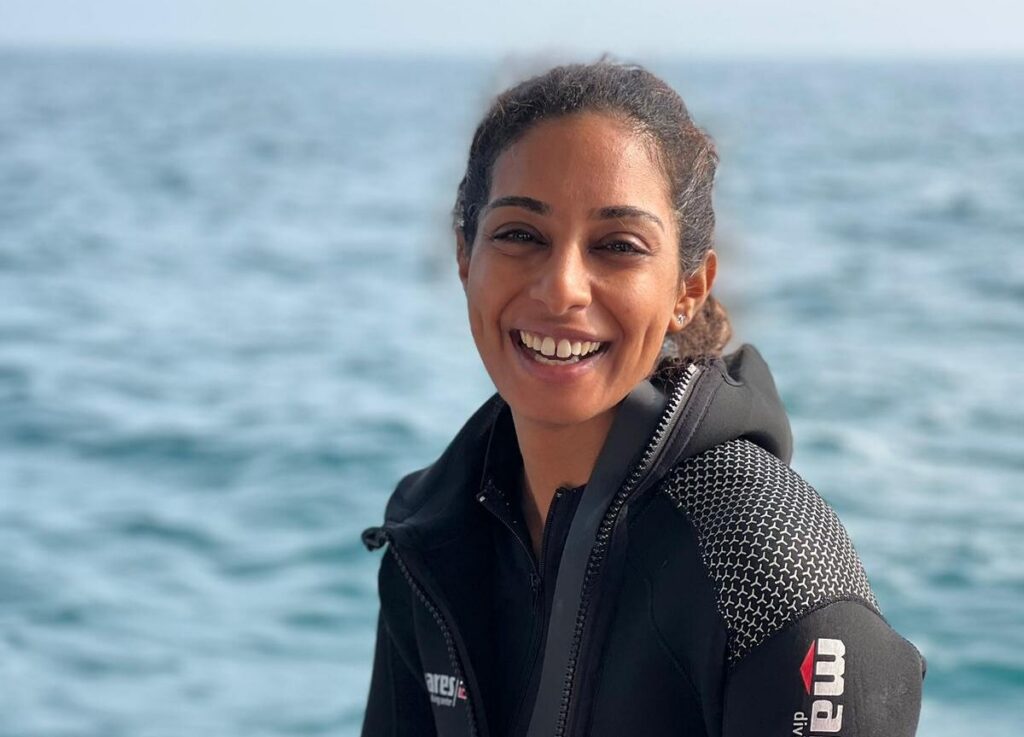
Dr. Reem AlMealla is a Bahraini marine ecologist and founder of Nuwat for Environmental Research & Education, Bahrain’s first environmental research and conservation think tank. Her work focuses on marine biodiversity conservation, coral reefs, sharks and rays, blue carbon ecosystems, and strengthening the connection between science, policy, and community engagement in the Arabian Gulf.
Over the last decade, Reem has worked on generating ecological baseline data to support evidence-based conservation and national biodiversity planning in Bahrain. She has contributed to regional and international conservation initiatives, including the IUCN Global Status of Sharks, Rays, and Chimaeras assessment, and currently co-leads FinSight Bahrain, the country’s first shark and ray conservation project using innovative approaches including environmental DNA (eDNA).
Through Nuwat, she works to empower local communities, youth, and citizen scientists by combining scientific research with storytelling, education, and ancestral knowledge to inspire a more nature-connected future.
Project Overview
Reem’s project, FinSight Bahrain, is the first shark and ray conservation initiative in the Kingdom of Bahrain, focused on understanding the diversity, distribution, and seasonality of elasmobranchs. Led by local scientists through Nuwat for Environmental Research & Education, the project combines innovative techniques such as environmental DNA (eDNA) and baited underwater video surveys (BRUVS), supported by traditional methods including fish market surveys and local ecological knowledge, to generate critical baseline data for conservation and management.
The fellowship will support multi-season eDNA surveys across Bahrain’s marine ecosystems, including coral reefs, mangroves, and seagrass beds, helping identify important habitats and potential nursery grounds for threatened shark and ray species. The project aims to strengthen biodiversity conservation in the region by providing evidence needed for national decision-making, international reporting, and future species protection efforts, while also empowering women, youth, and citizen scientists in marine conservation.
