
Raquel Bonato
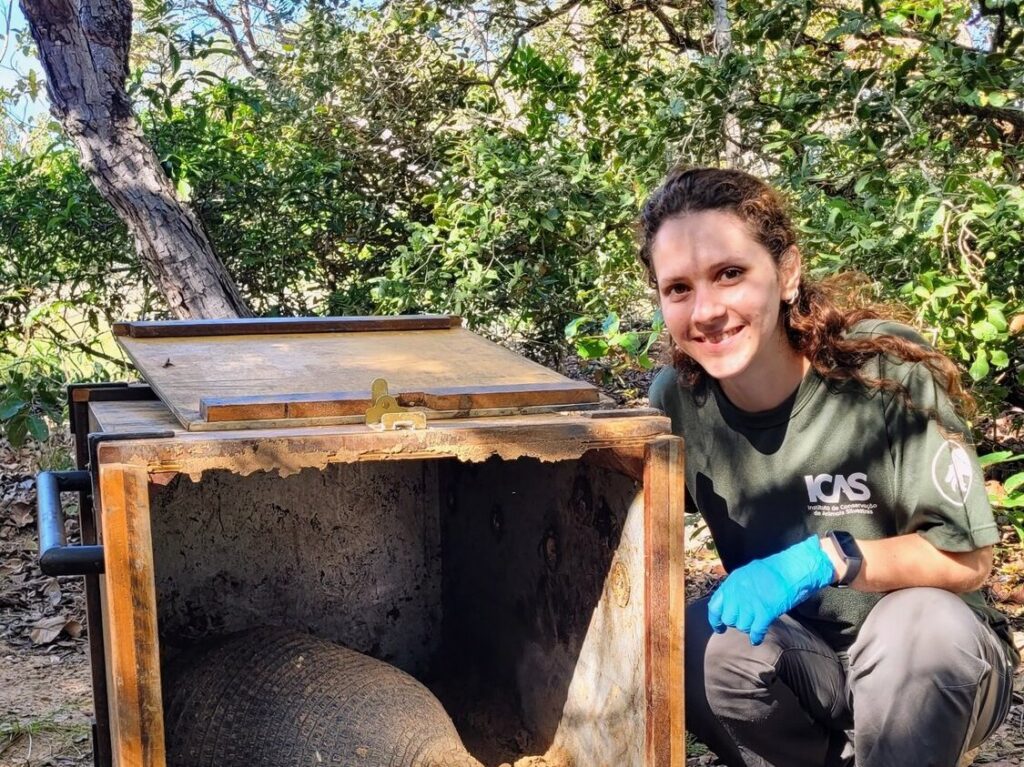
Raquel Bonato, one of Conservation Nation’s 2026 Conservationist Grant recipients, is a Brazilian wildlife veterinarian with a master’s degree in animal science. During her graduation in Veterinary Medicine, she developed her interest in wildlife conservation through internships in wildlife medicine, research, and extension projects focused on animal health, conservation, and environmental education. These early experiences shaped her understanding of the role of veterinarians in protecting biodiversity.
After graduation, she was awarded a FAPESP Technical Training scholarship (TT-3) at the Deer Research and Conservation Center (NUPECCE) at UNESP, where she gained experience in collecting samples, biobanking, fibroblast cell culture, and cytogenetics of neotropical deer. She later pursued her master’s degree at the same laboratory, focusing on molecular cytogenetics and phylogeography of one Brazilian deer species. During her master’s, she also completed an international research exchange at the Veterinary Research Institute in the Czech Republic, expanding her experience in genetic approaches and scientific collaboration for wildlife conservation.
Currently, she works as a wildlife veterinarian at the Wild Animal Conservation Institute (ICAS), contributing to the conservation programs of giant armadillos and giant anteaters in the Brazilian Pantanal and Cerrado. Her work integrates field-based conservation, biological sampling, and innovative approaches for the long-term preservation of these species.
Project Overview
Giant armadillos play a crucial role as ecosystem engineers, creating deep burrows that alter resource flow, provide shelter from predators, and serve as thermal refuges. These nocturnal and fossorial creatures are rarely seen in the wild and face declining populations due to human-induced pressures. Their vulnerability is exacerbated by low population densities, slow reproductive rates, and extensive home-range needs, hindering recovery and increasing genetic erosion risk.
Cryogenic biobanking is a vital conservation strategy for preserving genetic diversity and supporting future reproductive technologies. However, xenarthrans, particularly giant armadillos, are underrepresented in global biobanking initiatives. This project aims to establish a cryogenic biobank for skin samples from giant armadillos, ensuring they are suitable for recovering viable fibroblasts. A pilot study will develop and standardize efficient protocols for field conditions.
In Brazil, ICAS conducts routine monitoring of free-ranging giant armadillos in the threatened Pantanal and Cerrado biomes. This provides a unique opportunity to collect biological samples from individually monitored animals with known life histories, enhancing the scientific value of each sample. Expected outcomes include the establishment of the cryogenic bank, development of standardized tissue cryopreservation protocols, and creation of a collaborative network for conserving xenarthran genetic resources. Project activities and results will be shared through ICAS outreach programs to raise awareness about biodiversity conservation and the role of biobanking in protecting threatened species.
Ultimately, this initiative will bolster future conservation genetics studies and reproductive biotechnologies, while expanding cryobanking efforts to other xenarthran species and sample types.
