
Madhushri Mudke
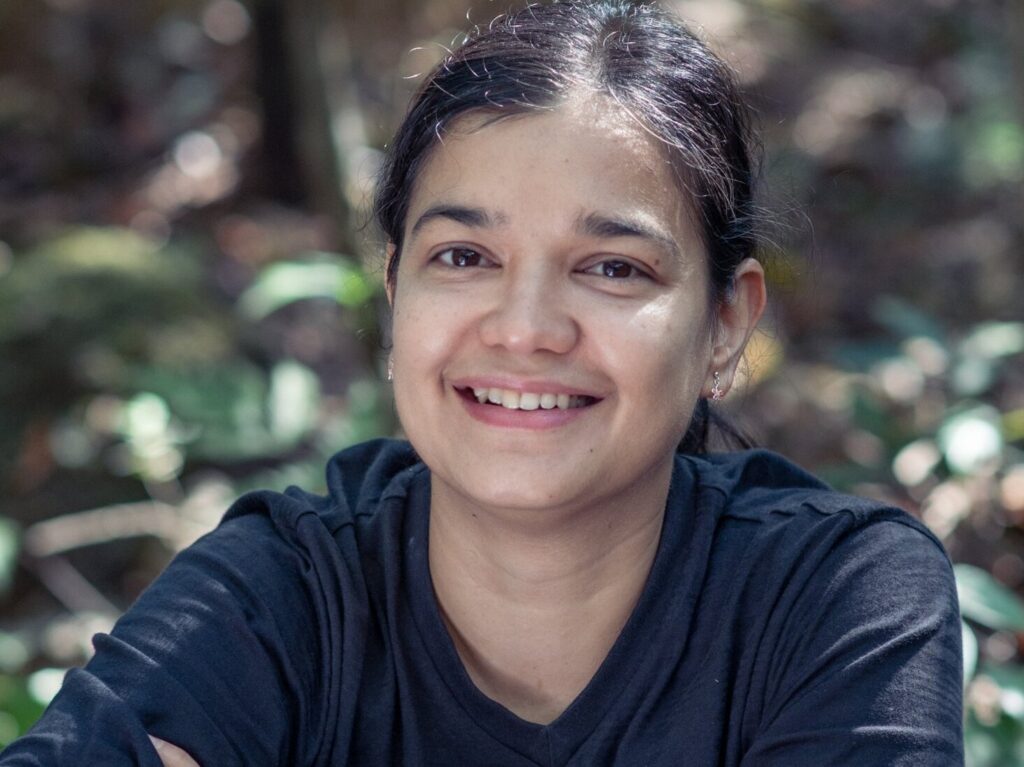
Madhushri Mudke, one of Conservation Nation’s 2026 Conservationist Grant recipients, is a conservation scientist working on the protection of threatened amphibians and freshwater ecosystems in India’s Western Ghats. Her work combines field ecology, community engagement, and conservation planning to support long-term habitat protection and species recovery.
She founded the Dancing Frogs Project to address major knowledge gaps for Micrixalus species. Her team generated the first detailed reports on the breeding ecology, habitat requirements, and live tadpoles of M. kottigeharensis, while contributing to IUCN Red List assessments that led to the species being downlisted from Critically Endangered to Vulnerable. She also built a community network that continues to monitor dancing frog habitats and document threats.
Madhushri recently completed her PhD in Conservation Science and Sustainability Studies at ATREE, where she examined how human activities and climate change influence amphibian communities in the Western Ghats. Her work has been supported by the ZSL-EDGE Fellowship and the Rufford Foundation and strengthened through international training in conservation biology, ecological monitoring, and project planning. As a postdoctoral researcher at CWS, India, she currently leads efforts to expand the Dancing Frogs Project into a broader, locally led conservation program.
Project Overview
Freshwater ecosystems in India’s Western Ghats, including headwater streams and ancient Myristica swamps, support biodiversity, water security, and local livelihoods. They are also home to threatened amphibians, including dancing frogs, a group in which approximately 92% of species are at risk. These habitats face growing pressures from land-use change, dams, and climate variability, while more than half of the region’s approximately 130 endemic freshwater species are not represented in the protected area network.
Amphibians serve as living sentinels: their declines can signal ecosystem stress from pollution, drying streams, and habitat loss, with implications for the communities that depend on these waters. Through her Conservation Nation project, Madhushri will conduct field surveys and habitat assessments to generate long-term data on amphibians and their freshwater habitats. Building on her previous research showing positive relationships between canopy cover and frog presence, the project will identify priority streams and Myristica swamps for conservation, as well as potential sites for future species recovery efforts.
The project will also equip frontline communities with tools to protect these habitats and document locally grounded conservation strategies in community-managed sites outside the protected area network. By combining scientific monitoring with community engagement, Madhushri’s work will support threatened amphibians and the freshwater ecosystems that sustain both wildlife and people.
