
Louiza Mwamburi
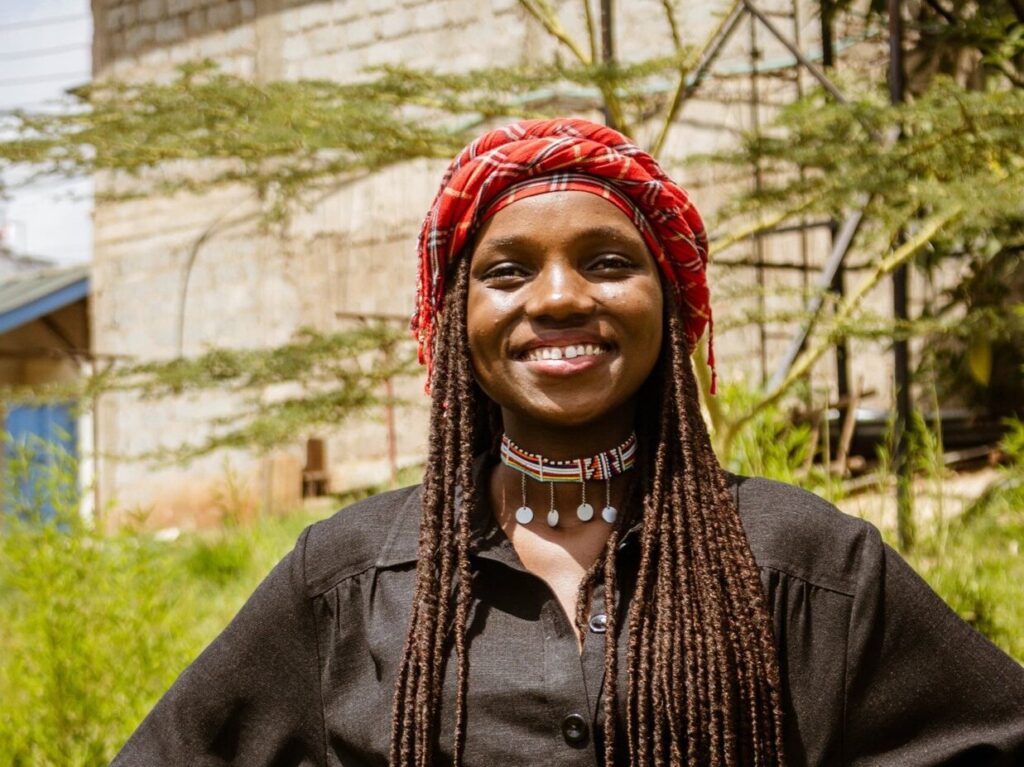
Louiza Mwamburi, one of Conservation Nation’s 2026 Conservationist Grant recipients, is a Kenyan wildlife conservationist, communications strategist, applied conservation researcher, and creative storyteller working at the intersection of biodiversity conservation, Indigenous knowledge, conservation technology, and community-led coexistence.
With over three years of program management experience and more than five years across conservation communications, research, and community development, she serves as Head of Communications and Programs at Stand Up Shout Out (SUSO), leading program design, implementation, strategic partnerships, applied research, grant development, and impact storytelling across Kenya.
Her work spans the full program cycle, from concept development and implementation to monitoring and evaluation, knowledge management, and strategic communications, integrating research, technology, and community engagement to deliver evidence-informed conservation initiatives.
She has helped strengthen youth and community participation in conservation by designing education programs, facilitating human-wildlife coexistence initiatives, and mentoring youth conservation ambassadors. Alongside her organizational leadership, she supports organizations through freelance research, technical writing, strategy development, and grant design, championing approaches that place communities, innovation, and evidence at the centre of biodiversity conservation.
Project Overview
Matriarchs of Coexistence is an Indigenous women and youth-led biodiversity conservation initiative strengthening human-wildlife coexistence across the Amboseli ecosystem and Athi Kapiti wildlife corridor through community stewardship, wildlife monitoring, conservation research, early warning systems, and Indigenous ecological knowledge in Kenya.
The project builds upon SUSO’s flagship Living Safely with Wildlife program by expanding the Ubuntu Coexistence Network, a women-led early warning system that helps communities respond proactively to wildlife movement and prevent conflict before it escalates. Rather than creating a new model, the project strengthens an existing community-led system by integrating participatory GIS, community wildlife intelligence, biodiversity monitoring, adaptive management, youth leadership, and applied research.
Women are equipped to document wildlife sightings, movement patterns, conflict incidents, corridor use, and coexistence outcomes, generating one of the first long-term community-derived biodiversity datasets for these landscapes. Conservation has invested heavily in monitoring wildlife. This project invests in the people who make coexistence possible.
Operating within Athi Kapiti (predator monitoring) and expanding across Amboseli’s nine coexistence villages (elephant and predator monitoring), the project positions Indigenous women as wildlife stewards and community researchers whose ecological knowledge produces field research at a resolution no research station can match. This project treats that knowledge as data, because it is. Beyond the grant period, the community-generated biodiversity data will continue informing SUSO’s Ubuntu Coexistence Living Safely with Wildlife program, strengthening adaptive management, biodiversity monitoring, future conservation research, and evidence-based decision-making across its coexistence landscapes.
