
Deepshikha Sharma
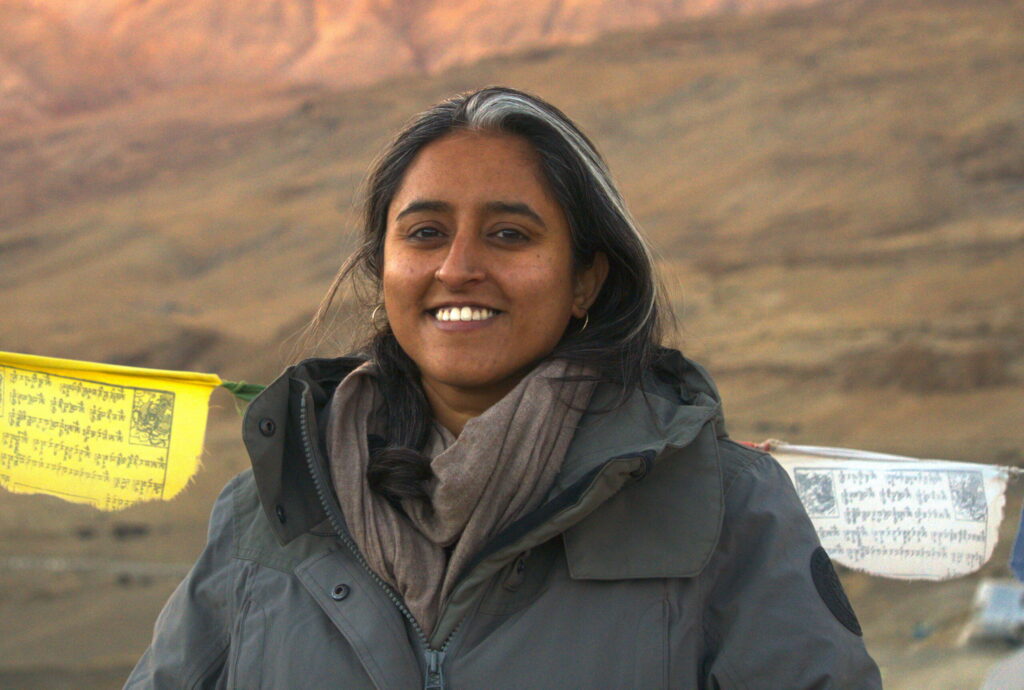
Deepshikha Sharma, a Catmosphere Fellow with Conservation Nation, has always felt inspired by the stories of human resilience and is especially drawn to local stories and movements of community-led conservation. Since 2019, Deepshikha has been working closely with agro-pastoralist communities sharing the trans-Himalayan landscape with snow leopards. Through her work, she has established a network of local conservation champions across four crucial snow leopard habitats. Through this network, she has been able to expand the scope of conservation in a contextual and participatory manner. She has also always advocated for broadening the role of women in conservation. Through establishing one of the first all-women-led camera-trapping teams, she is working towards enhancing women’s understanding of wildlife and thus their role in the conservation of the species.
Project Overview
Deepshikha’s project focuses on safeguarding species like the snow leopard by mitigating negative interactions and promoting positive opportunities and relationships between wildlife and people. Snow leopards (Panthera uncia) are rare but charismatic apex predators of the high mountains of South and Central Asia. India, although at the periphery of this range, offers a significant and important habitat for the species, thus making it a crucial region for conservation. The local and indigenous people inhabiting these parts, who are primarily agro-pastoral, often find themselves in situations of conflict with the snow leopard. In the past few years, due to changing land-use patterns and pressure from large development projects, people’s relationships with the land are also changing, thus impacting the overall health of these regions.
While communities at large have been supporting conservation, women who are most negatively impacted by human-wildlife conflicts and the detrimental impact on the environment are hardly part of the dialogue between the community, conservationists, and lawmakers. Through the Women in Conservation project, Deepshikha and her team are partnering with local women to expand their leadership in conservation. Currently, nearly 40 women are actively monitoring snow leopard populations and behavior using camera traps during the critical winter months, when human-wildlife conflict is most intense. Many of these women have also taken on the role of processing images to generate vital data for analysis. This collaboration has enabled the establishment of a long-term winter monitoring program across four villages, with the shared goal of making wildlife monitoring a truly locally led and inclusive initiative.
