
Crossing Continents for Conservation: My Fellowship Exchange in Yellowstone
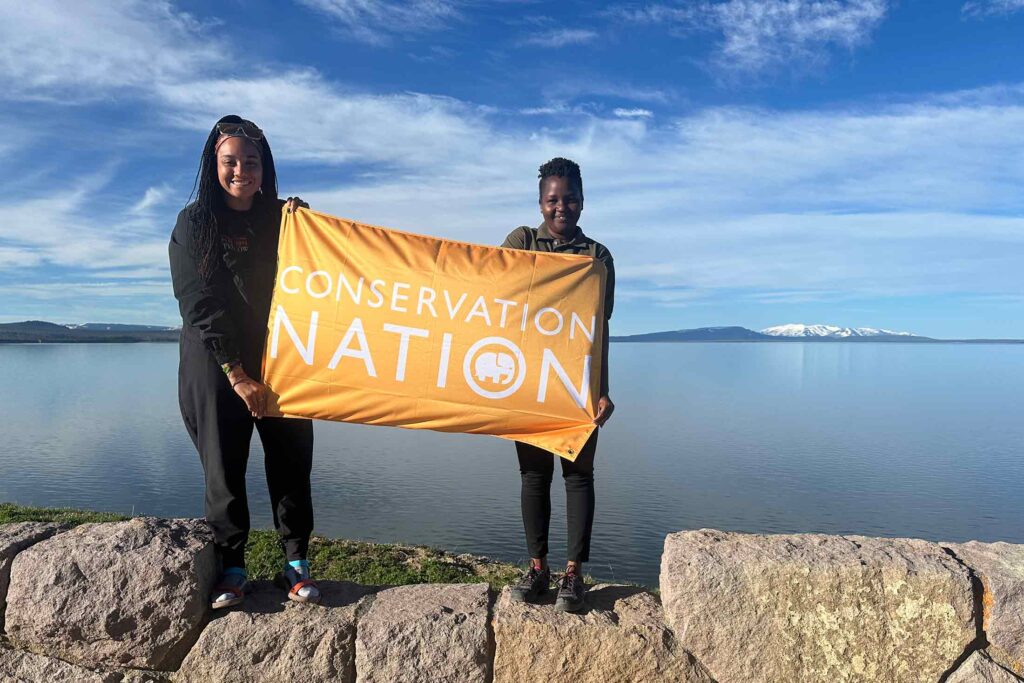
I recently traveled to the United States for the first time to visit Yellowstone National Park, the world’s oldest national park. This was a dream come true for me as a conservationist! I felt very honored to spend a week shadowing Conservation Nation Fellow Taylor Rabe and the Yellowstone Wolf Project team, learning about their work and exploring this beautiful place. Yellowstone’s landscapes were unlike anything I had ever seen.
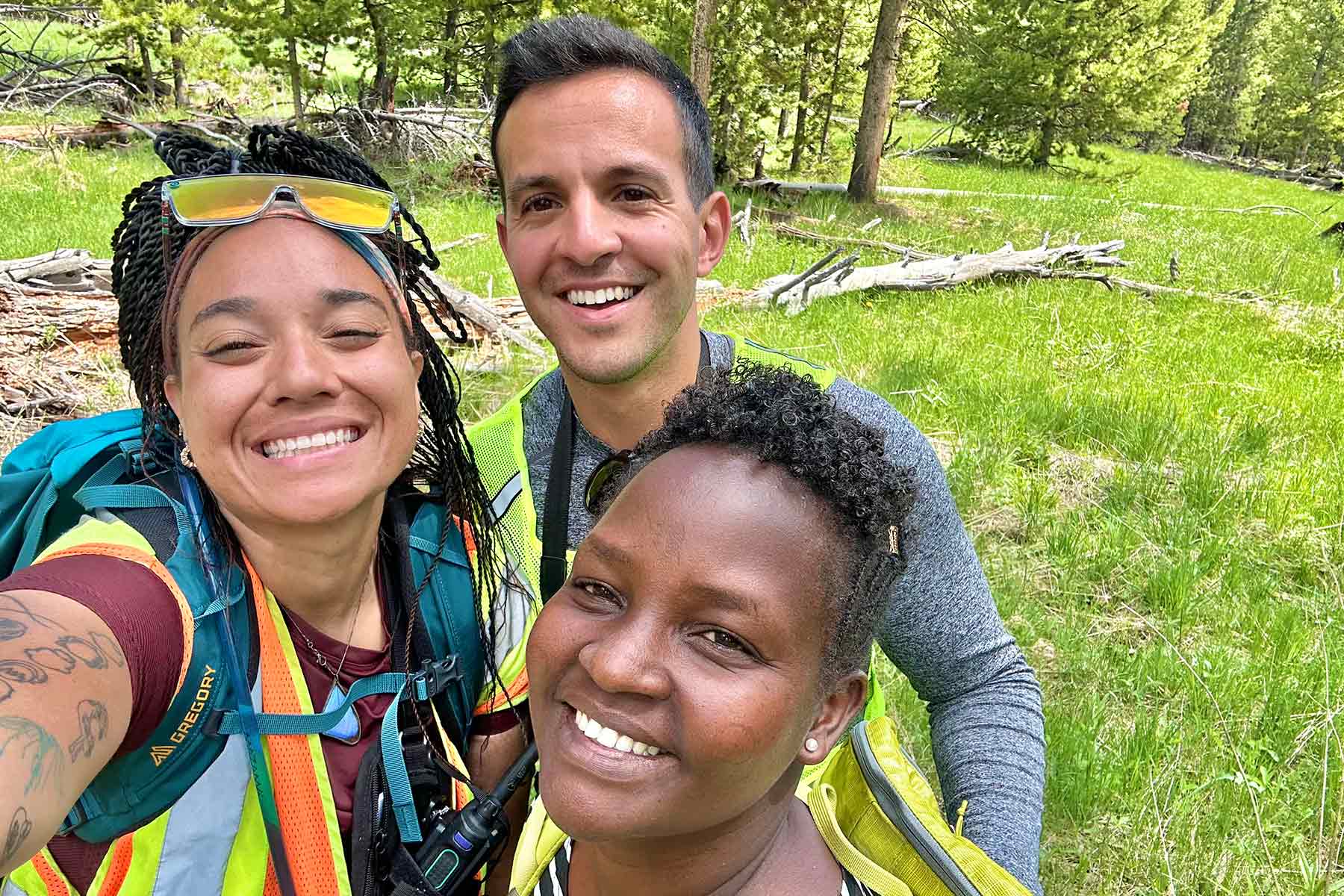
One of the most unforgettable moments was spotting wolves in the wild for the first time. In Tanzania, I work to protect large carnivores like lions and leopards, but observing wolves (and even bears!) was something entirely different.
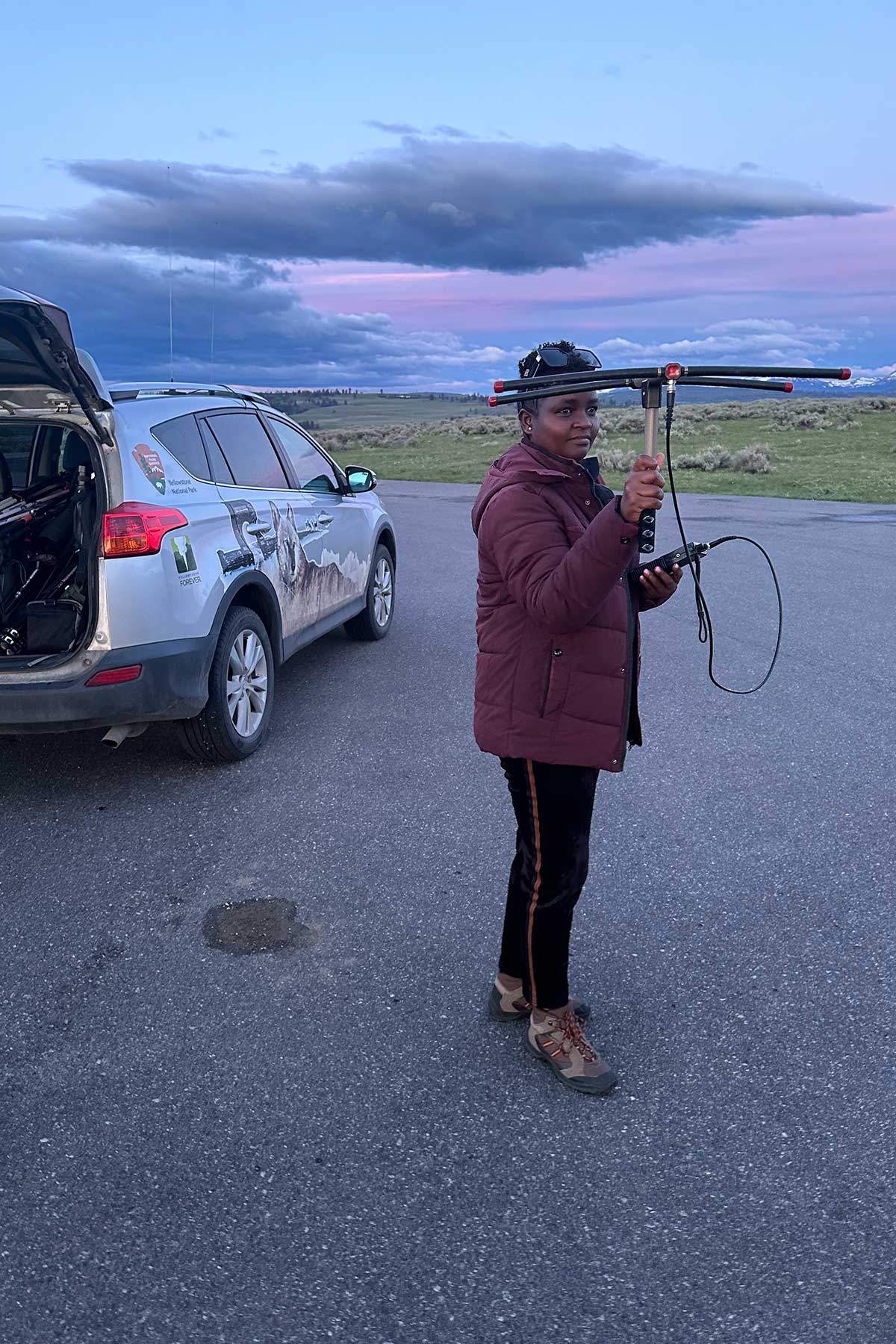
Joining the team to track these incredible animals using radio telemetry was a thrilling experience. I listened for the signal of each collar and used the data to locate wolf packs. I also helped set up bioacoustics devices, which record animal sounds to study their behavior and communication. Bioacoustics technology was new to me, and it opened my eyes to other ways we can monitor and protect wildlife.
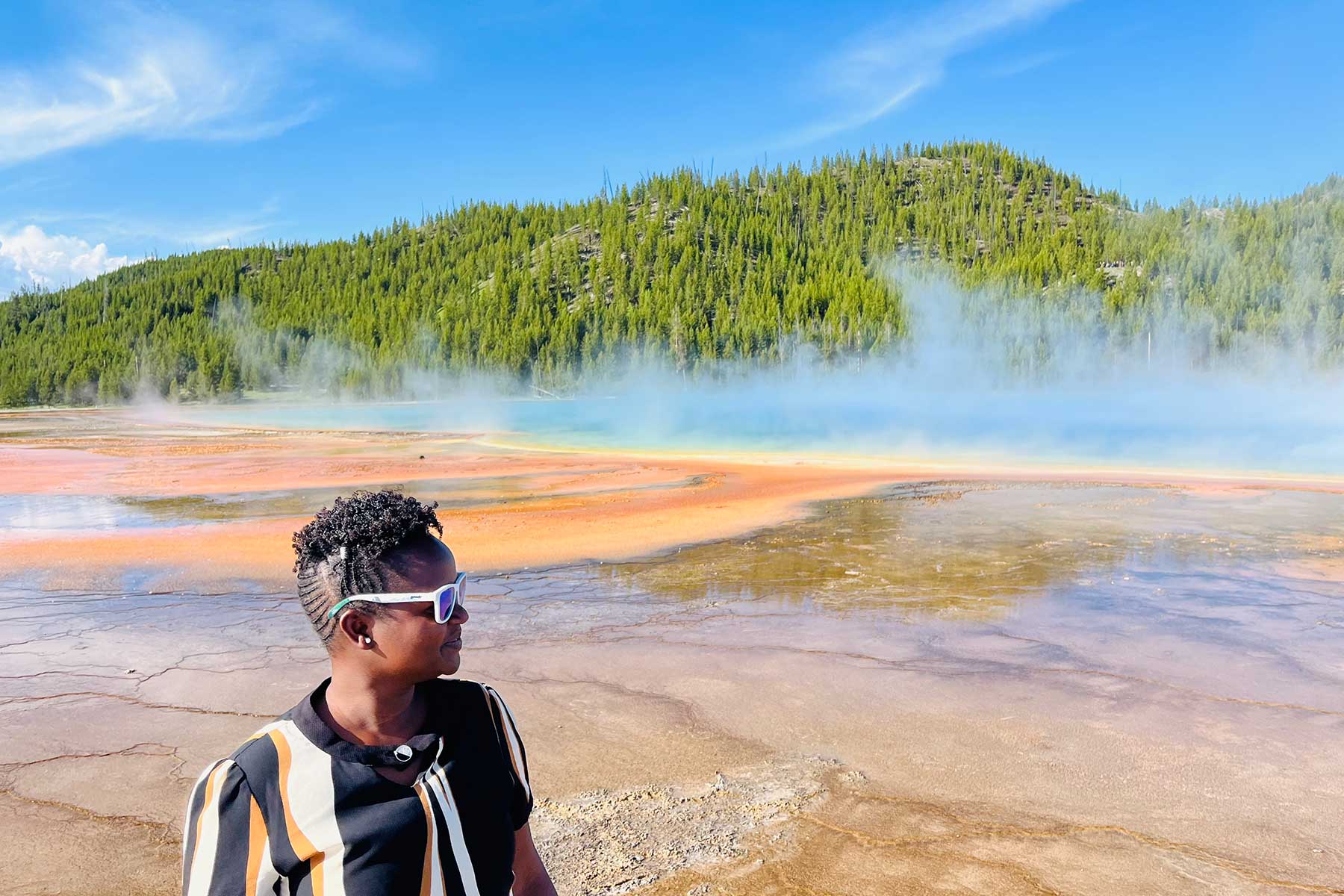
Hiking in Yellowstone was both exciting and challenging. The steep hills and cold weather were very different from Tarangire National Park, near to where I grew up with my family. I even experienced snow for the first time! But the beauty of Yellowstone made every step worthwhile. Places like Old Faithful and the Grand Prismatic Spring were stunning, and the Grand Canyon of the Yellowstone left me speechless.
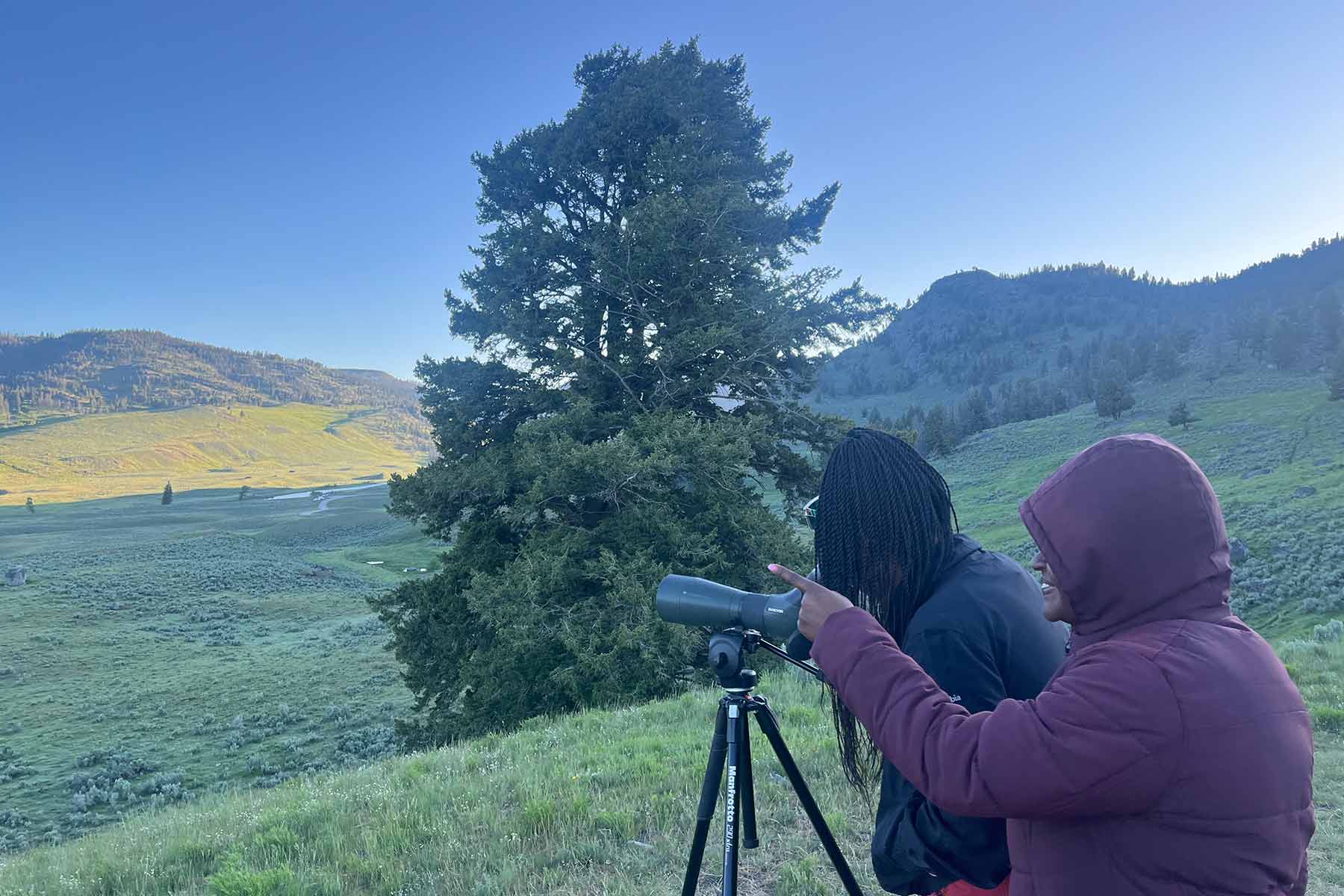
Seeing how these wolves have rejoined and now move across the landscape reminded me of the important role that predators play in our world.
I also shared some of our own work in Tanzania, including how we use Esri dashboards and mobile data collection to empower local people to monitor their environment. At African People & Wildlife, we believe in putting technology in the hands of local communities so they can take charge of protecting the wildlife and natural resources like grazing lands. Our approach also emphasizes human-wildlife coexistence, especially in areas where people and large carnivores live close together.
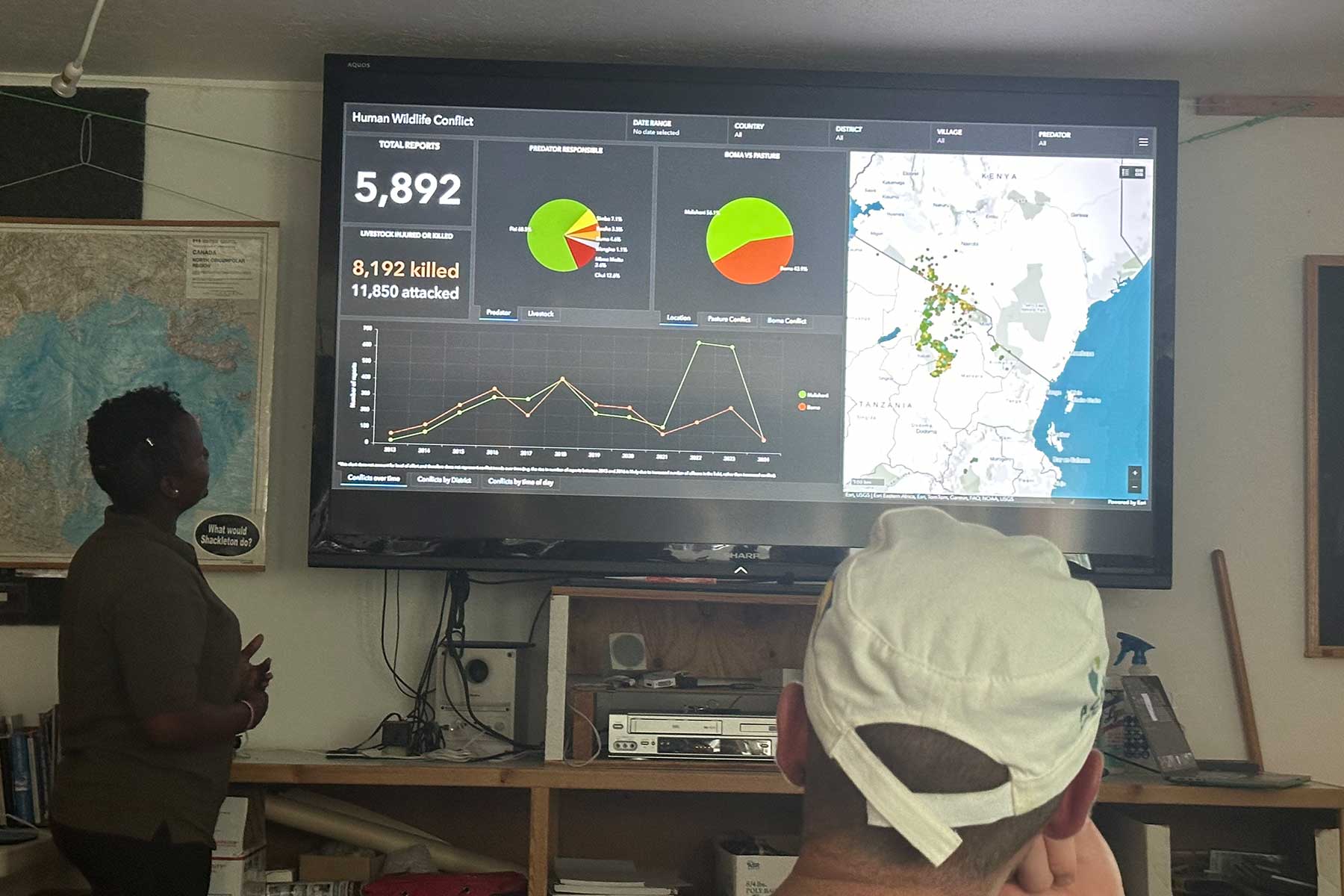
One of the biggest lessons I took away from this trip was the difference in how wildlife is perceived across cultures. In Tanzania, animals are part of our daily lives and cultures. For the Maasai, for example, lions and other animals are not seen as “other” but as part of our shared environment. In the U.S., it seemed to me that people think of wolves and other large carnivores as something separate from human life. Bridging these perspectives is essential if we want to create effective conservation solutions that respect both people and nature.
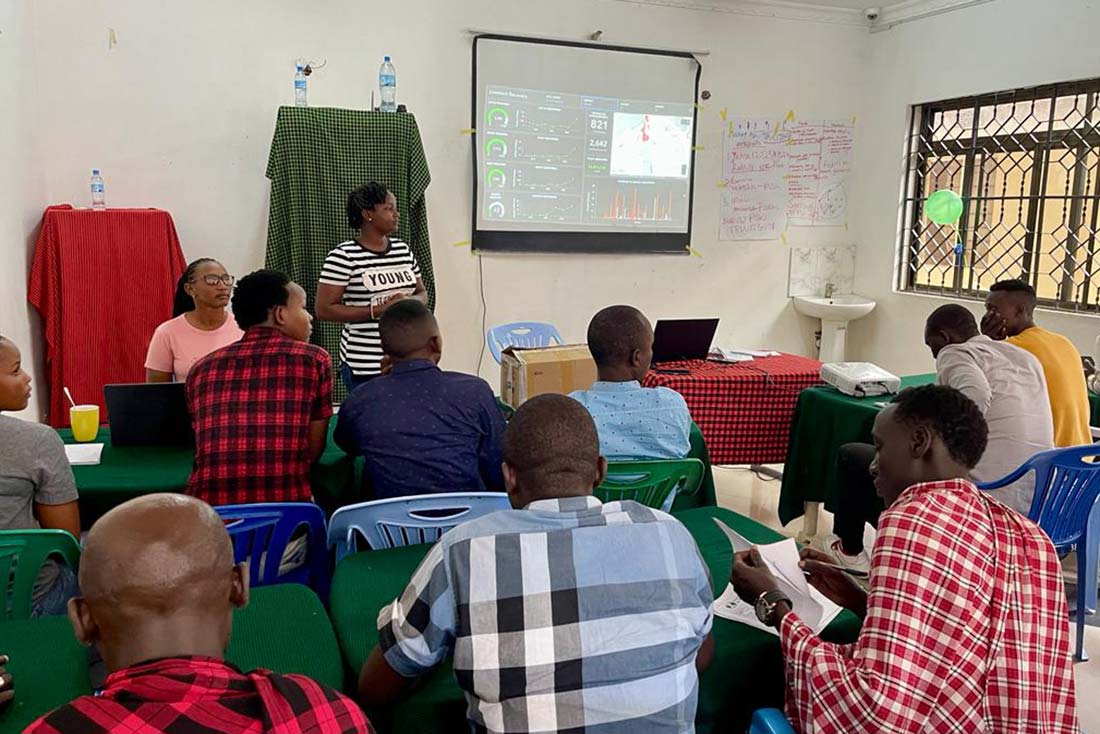
I am looking forward to Taylor’s visit to Tanzania soon, where we can continue learning from each other and building stronger connections between our work. I am excited to show her the beauty of my home country and introduce her to our holistic conservation programs. (And I’m sure we will take a game drive or two!) Thank you to Conservation Nation for making this journey possible and to the Yellowstone Wolf Project team and Yellowstone Forever for welcoming me so warmly.
Yamat Lengai is a Conservation Nation Fellow. Her fellowship is made possible with the support of Catmosphere, a foundation dedicated to raising awareness for crucial work in big cat conservation.